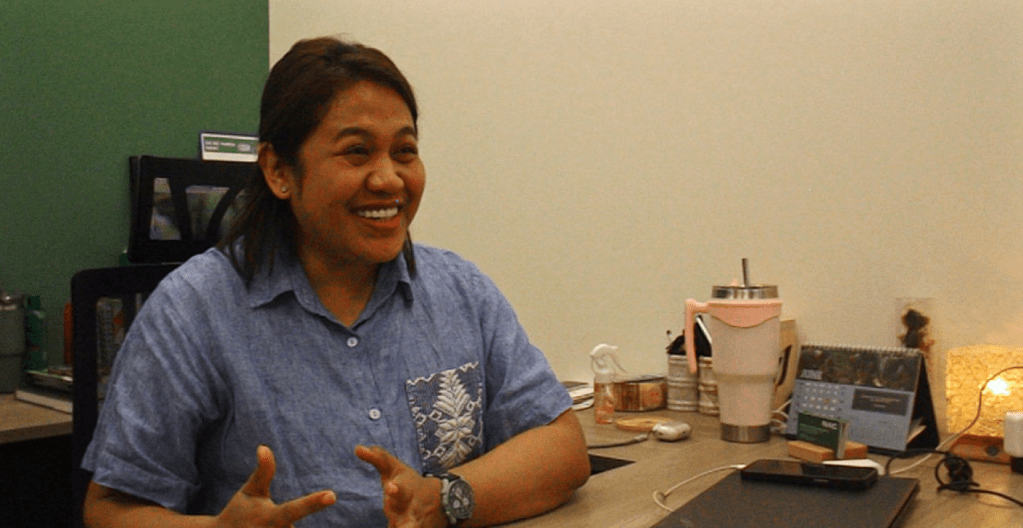
From her days as UP MINERS president, facing dilemma of where to start, to navigating her career in the mining industry, Ms. Remy Collado’s story is a testament that taking the road less travelled can lead to endless possibilities. Six years in the nickel industry, a leap into corporate roles, and leadership in safety and environment have given her an undisputed knowledge that would be a shame to not share. In this interview, she walks us through her journey and her insights on the evolving—and often misunderstood—nickel industry.
Our readers would love to know po who you are so would you be so kind to give us an introduction?
My name is Remedios Collado Camo. I started as Collado, tapos ngayon Camo, so baka sa UP Mines they know me as Collado. I’m currently the Assistant Vice President for Nickel Asia Corp. I handle subsidiaries of Nickel Asia in terms of safety and environment, strategic-wise, because yung sites natin have their own resident mine managers, so sila yung naghahandle sa site. Kami naman, we just give strategic direction for Nickel Asia. I’ve been working for NAC for 3 years, but I started with Rio Tuba for 6 years.
What were your aspirations as a child?
Actually, nung bata ako, akala ko magiging negosyante ako. When I was young, every summer nagtitinda ako ng halo-halo. Yung mga ingredients, kasama ko si Papa, and then we’d go to the market early in the morning—bata pa ako noon. So parang laro lang siya, but then nagpo-profit siya. I’d make the halo-halo and then the neighbors would buy. Imagine, during that time may profit ako na ₱500 per day. And then usually, at the end of the day, pag di pa ubos yung ingredients—since di mo na siya magagamit the next day—tatawagin ko na lahat ng kapitbahay namin, tapos libre na siya. So akala ko, paglaki ko, entrepreneur ako.
How was your journey in UP Diliman, especially in Mining Engineering?
Naalala niyo yung nilalagyan natin ng course—usually engineering. Pero ako, I was very silent; I put BS Business Economics as my quota course, so di ko talaga siya sinabi, kasi pag di ako pumasa, at least may fallback. Pero ayun, luckily nakuha ko yung Business Economics. But I was also a DOST scholar, so diba, madaming kwento na when you pass the scholarship, you need to take a science or engineering course. Tapos I didn’t start with Mining; I started with Industrial Engineering. So ayun, it was circumstantial—may nangyari sa grades natin so I had to shift. At that time, DMMME was very encouraging to students to come take Mining. So it was really circumstantial lang talaga. Sabi lang namin, “Tara, mag-Mining tayo,” then we enrolled. And then yun na—until we graduated, we were thinking we took the road less travelled.
At our time, only ten of us graduated, kaya ang tawag namin sa barkada namin “EM 10.” Pag nagt-take kami ng classes, ten lang (din) kami. Wala ding full-time prof during our time; mga prof namin nasa industry gaya nina Sir Mon, Sir Emil, Sir Disini, so ang classes namin noon hapon, or gabi, or Saturday. Pero happy naman kami kasi solid kaming sampu.
Actually, nauna silang (EM 10) mag-board exam, pero sabay-sabay kami mag-OJT, and lahat kami natanggap sa Philex kasi yun yung may underground. Kaya if they say kung gusto mong bumalik sa minahan—oo, syempre. There’s a nostalgic amoy sa minahan na hinahanap mo. We enjoyed it so much, and it was a collaboration with other schools. In fact, during our OJT, nakasabay namin yung last Mining Engineering student ng Mapua.
Can you tell us your journey in UP MINERS?
It’s so different back then. If you have an organization sa UP, minimum is 15 members to be recognized, so hirap pa kami kasi kami nga 10, diba. So hahanapin pa namin yung ibang higher years na pwede naming isama. Pero meron kaming goal na mabuo yung UP MINERS, so even if it was very hard to keep it together kasi kakakunti kami, we made up time para ma-recognize din siya.
So during that time, we had the higher years na nagtayo ng UP MINERS to help us. And then, in 2016, naging president ako ng UP MINERS and it was very hard to do yung mga activities nun kasi kakaunti lang kami. We didn’t have a formal application kasi we wanted to have more organization members. During that time, ang goal lang ay mabuo siya. And while binubuo siya, nagkakaroon din kami ng activities as a group kasi di pa kami masyadong lumalabas.
It had its advantages and disadvantages. Advantage is very solid yung acads ninyo and activities ninyo. Pero medyo hirap kami outside kasi ang kalaban mo medyo malalaking organization. Pero advantage naman is madali ang mga activities kasi kasama mo si Sir Mon, Sir Emil.
When you became the president of UP MINERS, what were the milestones of UP MINERS under your presidency?
So nung time ko, we already started joining yung Engg Week. Kahit kakaunti kami, parang puro activity, isa yung nakatoka. We started with KickEngg, yung sa football, VideokEngg, swimming. We tried our best to enter the Engg Week para ma-recognize kami.
As early as before, we were already part of Annual Mining Safety. Kinukuha kami ng PMSEA as a timer para lang may exposure kami sa conference. We go to Baguio to connect with the industry kaya ang haba na ng stint namin sa AMSEC. Kaya we’re very glad na after ng year namin, nagtuloy-tuloy na siya, and we’re very glad na until now it’s up and active.
Actually, nung time namin, kaunti ang graduates, madami ang companies. Ang challenge is saan kang papasok na company. Kasi kunyari kami, 10 lang kaming pumasang mining engineers, tapos ang daming mining companies. Ang question—I remember si Sir Disini—“Where would you work, sa malaking mining company na established or sa maliit na mining company na starting pa lang?” So ayun yung dilemma namin.
So when you decide kung anong papasukan mong mining company, you would also check kung ano yung stability and values ng company. Ako, yung first job ko was in a new company. Parang ayun yung naging challenge—when you graduate, gusto mo lumayo, you want adventure. So my first job was in Surigao, in Carrascal. It was my first time hearing that lugar; I didn’t even know it was in Mindanao. But since kakagraduate mo lang, excited ka. Kaya nung time na nagpunta ako dun, parang di ko alam saan matatapos yung minahan.
So that was my experience—yung pagkadventurous ko nun, bigla akong natakot, “Saan ba ako pupunta?” But then it was a very good experience; parang naging independent ka talaga.
So when you started in the industry, you went into nickel?
Yes, nickel.
So why nickel?
During that time, ayun yung nag-boom na industry. It was never a question of nickel specifically, but more of the opportunity that was available. It never occurred to me to think, “Philex ba, or gold?” Ayun kasi yung pinaka-open.
How different was the nickel industry when you first started as opposed to now?
At that time, iba pa yung market. Mabilis yung shipment noon kasi ang taas ng presyo ng nickel, kaya sobrang dumami yung mining companies. Mataas yung market compared ngayon na mas mabagal yung shipment. During that time, kahit mababa yung iron, sellable pa rin siya.
You started sa Carrascal Nickel. How did you get into NAC?
Medyo nag-six years ako sa nickel industry, then after that pumasok ako ng Lafarge. Kasi when you graduate, excited ka—challenge—you go somewhere malayo. Then after six years, I wanted to go back to the city, kaya pumasok ako ng Lafarge. Lafarge is in Angono lang, so medyo malapit sa city. Hinahanap ko naman that time is stability sa city.
Then after Lafarge, nag-Rio Tuba ako for 6 years. After that, doon na nagkaroon ng opportunity to go corporate. For me, it’s better that you go first sa ground, then when you know the ins and outs of the mining industry sa ground, that’s when you go corporate.
We learned po that most of the work you’ve done is in safety and environment. Why safety and environment as opposed to other parts of mining?
Again, it was opportunity. When I started with Carrascal, I was in planning and engineering. And then, kakaunti ang mining engineers at that time. Parang we were forced to grow up—somebody would take on mining engineering, somebody would take operations, and nobody wanted to take safety.
So parang, “Sige, gusto mo ba?” “Sige, let’s do it.” Ilang years pa lang kami, heads na kami agad kasi due to the scarcity of engineers. So I took the challenge, and nag-tuloy-tuloy na siya. And when you say safety, it still involves engineering, so tiningnan ko rin yung holistic approach sa mining industry.
Can you walk us through paano po kayo napunta sa position na ito?
When I started in safety sa Carrascal, I was also in safety when I transferred to Lafarge. Sa Lafarge, meron na siyang dalawang sites—in Angono and Bulacan—so I took that role. Then nagkaroon ng open position sa Rio Tuba, Palawan, as safety manager, so I grabbed the opportunity.
I would say instrumental din yung mga mentors and higher-ups sa position that I have, kasi kung wala yung trust nila sa akin, I wouldn’t be here. Kaya it’s very important to keep your work excellent kasi dadalhin ka niyan wherever you are in the industry.
During that time, nagkaroon ng bagong regulation—you needed to be ISO 14001 certified. So pumasok na rin ako sa route na yun, managing the management system: first environment, then quality, safety, and health management. Sa kabuuan, QEHS na yung hawak ko.
Nagkaroon ng changes sa organization ni Nickel Asia, so I was given the chance to go to corporate. I started first sa industrial safety, then there was a position for environment, so pinagsama na rin. And Nickel Asia is a holding company—it manages its subsidiaries. Minsan kasi tinitingnan ang Nickel Asia as a mining company, pero it’s actually a holding company managing its subsidiaries. Currently, Nickel Asia has six operating sites, and all of those we have to oversee.
Nickel has always been controversial. Has it always been that way, and what’s your say?
Ngayon, mas dumami lang yung regulations. During that time, wala pa yung dami ng permits na kailangan. Ngayon, DENR has shifted towards a different system, with more permits and processes you need to fulfill. I guess mas okay na rin siya, because it shows that before ka mag-operate, you have to go through a lot of rigorous permits and processes.
The challenge is explaining this, kasi nickel is open pit—so yung optics, kitang-kita talaga. But then, just like a building, diba, ang umpisa talaga ng development ay pangit tingnan. So yun yung challenge sa atin: to explain to the general public that you have to understand the process.
So this might be controversial po, pero noong time po ni Gina Lopez, how was the corporate environment ?
When you’re doing the right work in the industry, you have all the evidence to show it. When Gina Lopez was secretary, she was invited and went to Rio Tuba. Her first reaction was very awkward—kahit bigyan mo ng food, di ka niya bibigyan ng smile. Pero nung nakita niya na, in-explain sa kanya, nag-soften siya.
Kasi pag sinabi mong mining, people already have prejudice na destructive siya, may cutting of trees. That’s why kapag may controversy, mas maganda makita nila mismo on the ground. With Gina Lopez, she started awkward, nakataas kilay habang ini-orient siya, but when she went to the site and saw the rehabilitated areas—mind you, after the mine site tour she was singing her “I Believe I Can Fly.” She even said, pwede pala ang responsible mining sa Philippines, kasi nakita niya.
If you don’t see a mine site, ang prejudice talaga is pangit and destructive. Gina Lopez was a testament that responsible mining is possible. During that time, excited pa kami kasi we could show it. Matatakot ka lang if you’re doing something wrong.
Within the nickel industry, ano yung ginagawa para mabawasan yung stigma sa mining?
We’re very active sa mga IECs, forums, awareness programs. May layers yan—from community level, to provincial, hanggang national—para maipaliwanag kung ano talaga ang responsible mining. We show the benefits, best practices, and we definitely go beyond what’s required by the regulatory agencies.
Mahirap siya i-explain, pero it takes effort. Kaya we also support students and universities sa activities that promote the mining industry.
Do you have any difficulties convincing people about mining?
Yes—especially yung mga close sa’yo. Family, friends—sila yung pinakamahirap iconvince kasi may prejudice na sila. Ako personally, I don’t fight with them. I just explain what it really is, and ask them to visit the site to see what’s happening.
Optics-wise, talo na tayo agad. But mining isn’t just extraction—it impacts the community, the environment, and the country.
Sa tingin niyo po, 15 years from now, how different would the nickel industry be from what it is right now?
Because of technology and sustainability, I think there will be a lot of improvement and efficiency. Mas kaya na natin lumaban sa stigma, lalo na dahil sa AI.
Right now, what I’m seeing is green—especially since nickel is important in the transition to EVs and green technology. Nickel is one of the green metals. We have a lot of resources in the Philippines, so I hope maganda yung ma-envision natin, especially with government support.
With the nickel export ban and lack of nickel processing activities, what are nickel companies doing to combat that?
It’s always been a challenge, especially sa processing. There are only two processing plants. Nickel Asia is very active in PNEA (Philippine Nickel Industry Association), an organization that pushes for the industry’s needs and requirements, especially in lobbying with the government.
Do you think PH has the capability to process all the nickel?
We have a lot of resources. If we can upgrade and export processed products, it will be a big boost to the industry. Right now, even direct shipping contributes to GDP—imagine if we process it, export finished products, or even produce batteries and EV parts locally.
Example: in Coral Bay, the end product is nickel cobalt oxide. In Japan, that becomes steel plates for Toyota cars. Imagine if we do the same here.
So tingin niyo, how far off are we from that future? Ano yung setbacks natin?
Investment-wise, it’s still up to the government. If we get support, we can partner with countries like Japan or Australia who already have the expertise.
Resources-wise, we have it. Area-wise, we have it. So it’s really about collaboration. If everything is right and we process here, kaya natin. Imagine if tayo na mismo gumagawa ng raw materials for our own EVs—there’s already interest in the Senate to push that.
What would you say to students who are still unsure of mining engineering as a career?
I always go back to the why. Mahirap ipagpatuloy if you can’t answer your why. Mining is challenging—but when you look at it, you’re not just working for a profession; you’re making an impact on the environment, the community, and the country.
 UP MINERS
Leave a comment